Good morning, colleagues.
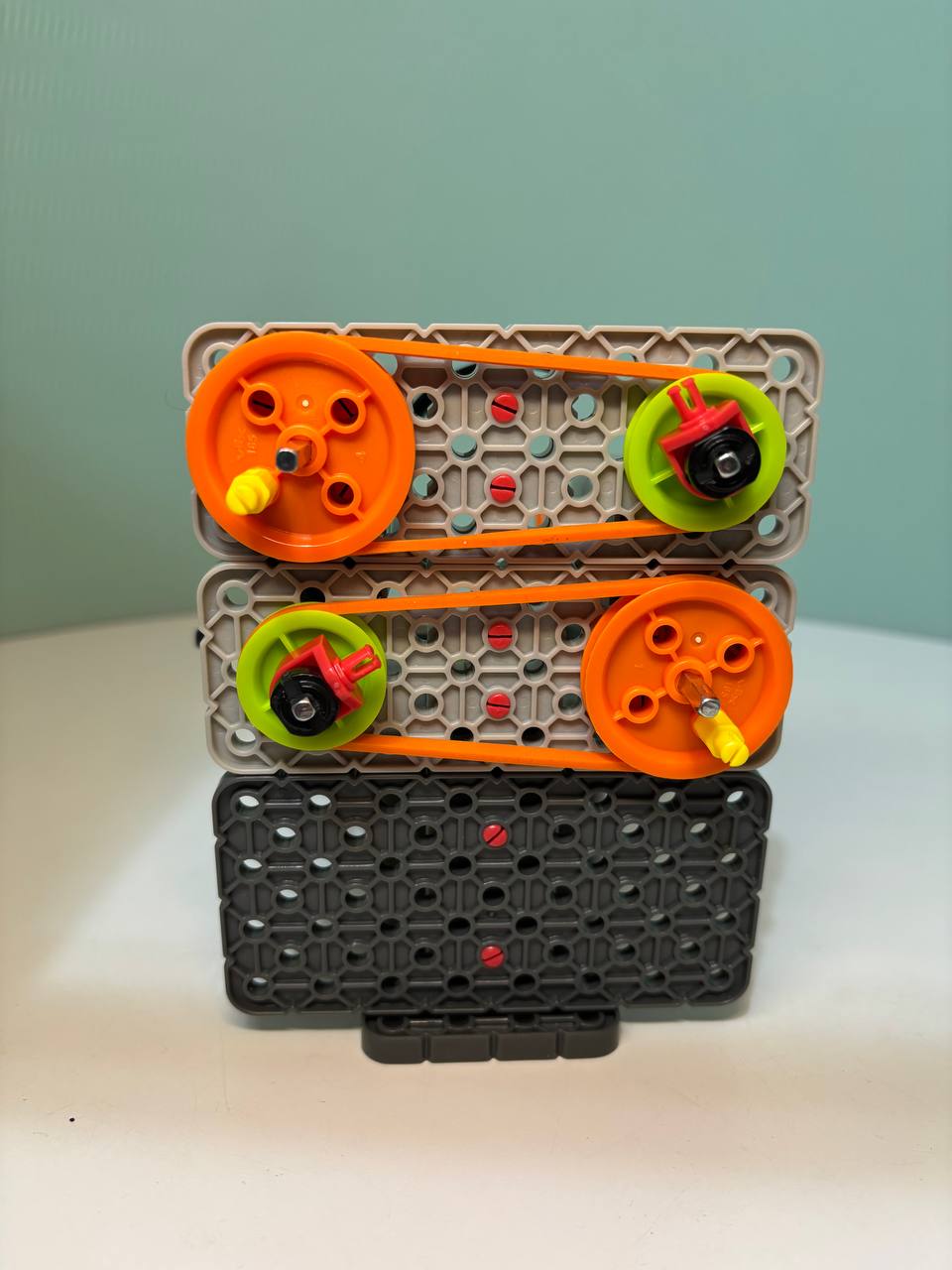
As promised, I’m sharing my new model that helps children explore belt drive mechanisms. This is a modular model that allows students to demonstrate gear reduction and gear increase, as well as count the number of rotations of the driving and driven pulleys.
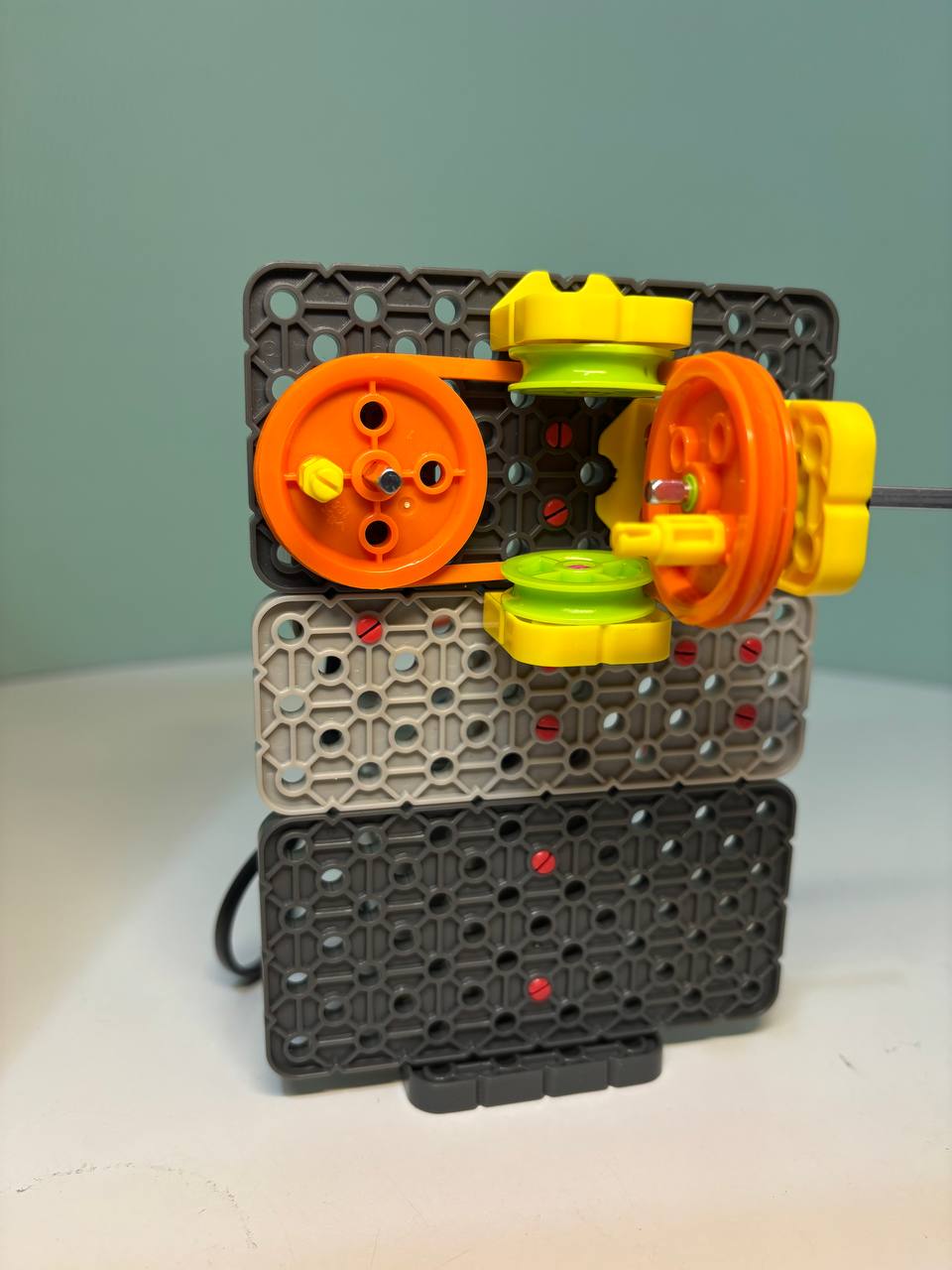
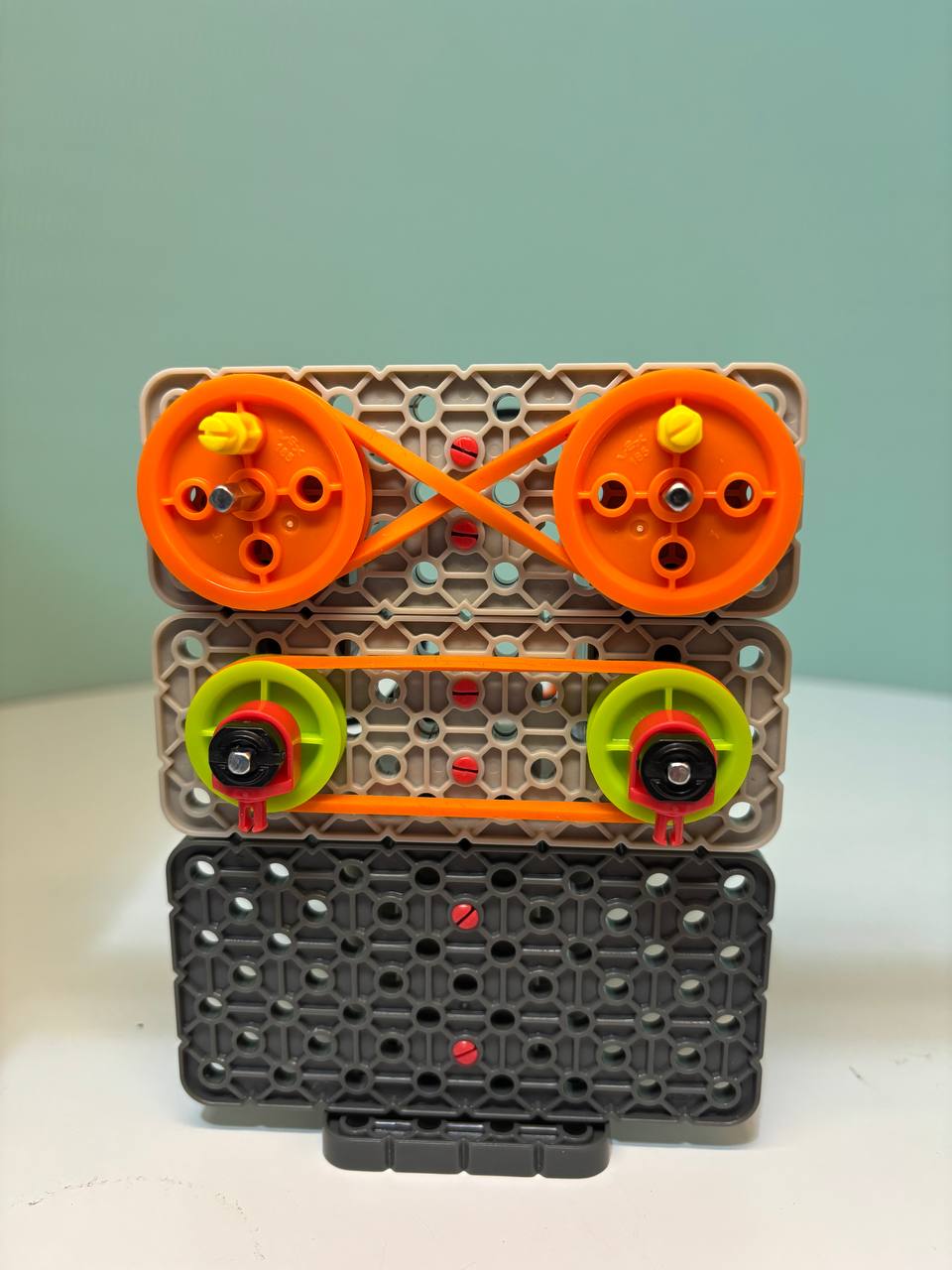
The model also includes a crossed belt drive (figure-eight configuration) and an angular belt drive, where the rotation is transmitted at an angle rather than in a straight line, as in most belt drives. This is achieved using two additional pulleys.
How do you explain belt drives to your students?
1 Like
Wow! Thank you for sharing  What a neat way to illustrate this concept!
1 Like
Thank you.
Robotics is impossible without understanding simple machines, mechanical transmissions, and mechanical structures. That is why we always study these topics at the beginning of the course.
For this purpose, appropriate models are needed. I also develop worksheets so that children not only observe the process but also take measurements, conduct investigations, make calculations, and record their results in the worksheets.
Wonderful. I love when students have the opportunities to conduct scientific experiments in an engaging and hands-on manner.
1 Like
Thank You!
The great Ukrainian educator Vasyl Sukhomlynsky once said:
“A child’s mind is at the tips of their fingers.” I always follow this principle and complement all theory with hands-on practice.
2 Likes