In this workshop at the 2026 VEX Robotics Educators Conference, we worked together to reframe the ways in which we think and feel about bugs in our VEX AIM projects. We talked together about some of the types of bugs we encounter with students, and how often times debugging feels like trying to put out fires so the “real learning” can continue. However, debugging is an integral part of that “real learning”, and helping both students and teachers see bugs as things to think with, can help position debugging as a more positive learning experience for everyone.
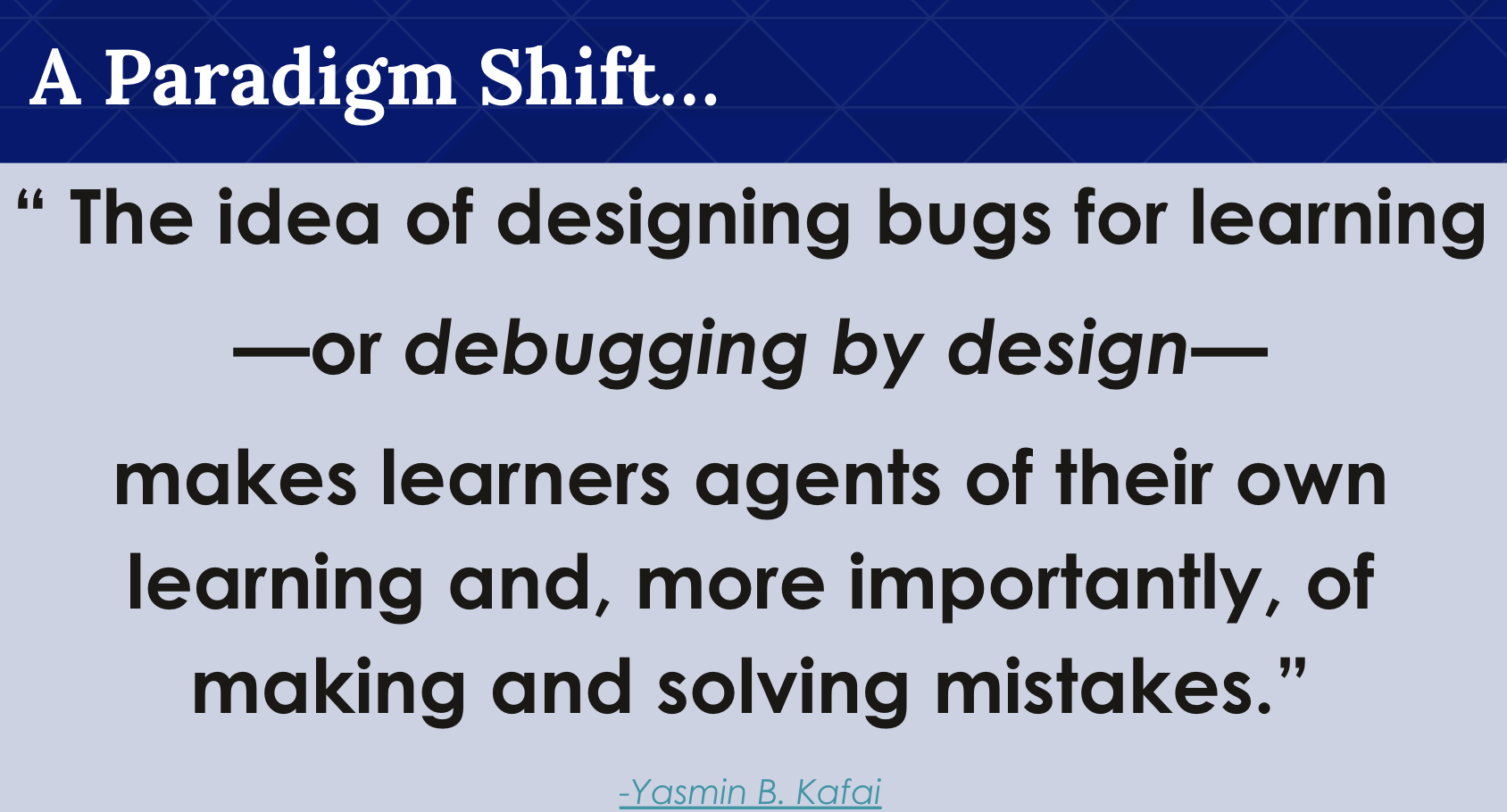
We introduced the idea of “debugging by design” where students intentionally create bugged projects for others to solve, and how this can tell us so much about where students’ understanding of different topics and concepts lies. [Here’s the paper about this framework, in case you’re curious.]  (https://digitalcommons.usu.edu/cgi/viewcontent.cgi?article=1810&context=itls_facpub)
In the slides shared in PDF form here, there is a series of “bugged projects” that we worked through together.
Seeing Isn’t Beliving_ Collaborative Debugging with VEX AIM.pdf (2.9 MB)
(If you need help with what the bug(s) in each project are, just ask in this thread  as well as the bugged project that participants actively worked to debug.) This was where things got to be really fun! In the act of debugging - every group solved the problem in slightly different ways. They all got their robot to perform the desired behaviors, but the way they went about it was unique to their thinking. And that’s the great thing about bugs! There is no “one size fits all” magic for debugging, because bugs are unique to their creators and the way they are thinking about the task at hand.
Once everyone had debugged the bugged project I gave them, they spent time creating their own bugged project to share with an expert. We had people making bugs that they intended to make, and also creating unintentional bugs as byproducts of what they were trying! The creativity on display was contagious - and that is the magic of debugging by design. Instead of breaking the creativity and open-ended thinking that goes into building projects when a bug occurs, it seeks to keep those ways of thinking open throughout the debugging process.
Have you tried debugging by design with your students? Please share your ideas, questions, or experiences in this thread to continue the conversation!