Good afternoon, colleagues.
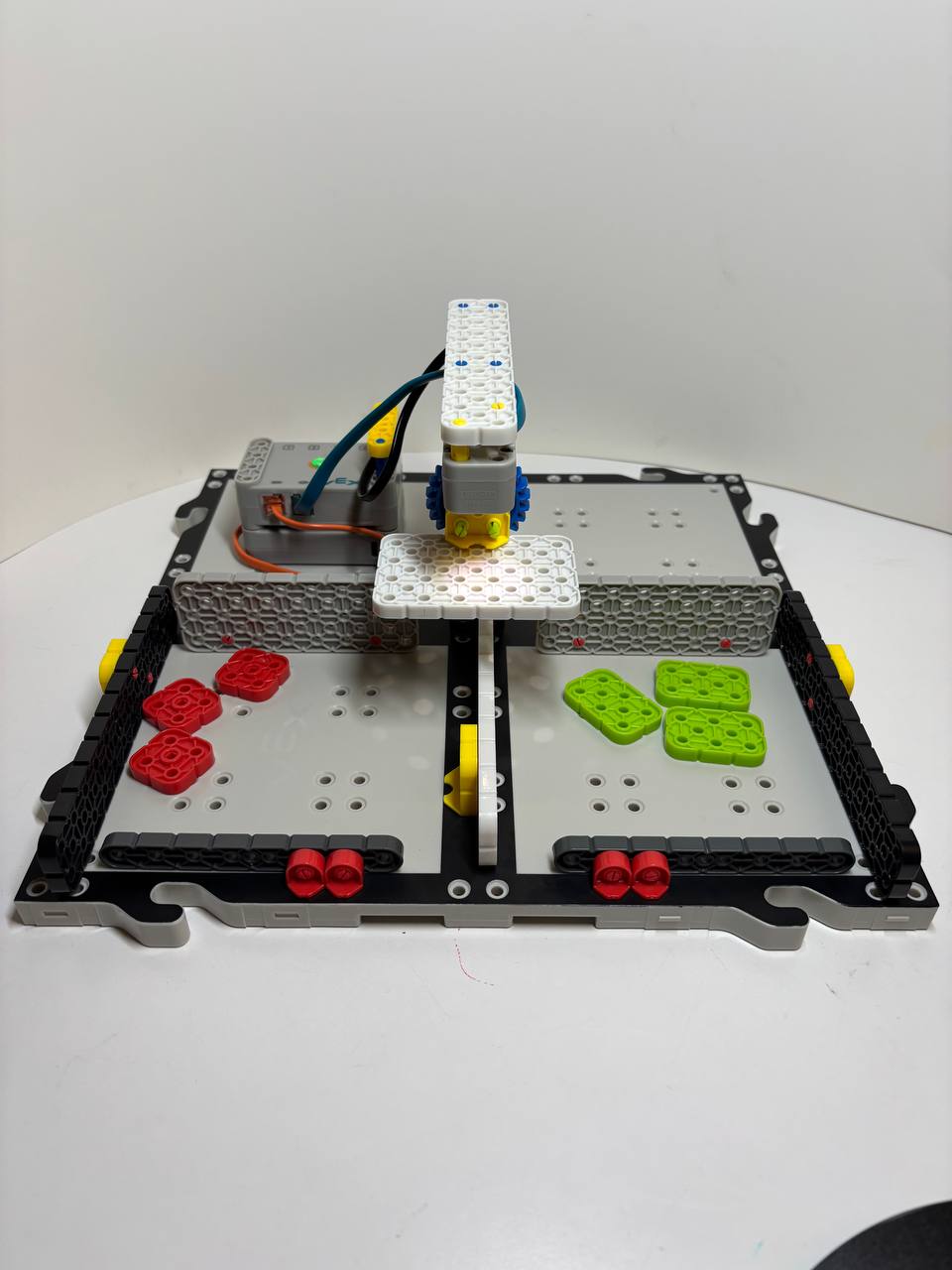
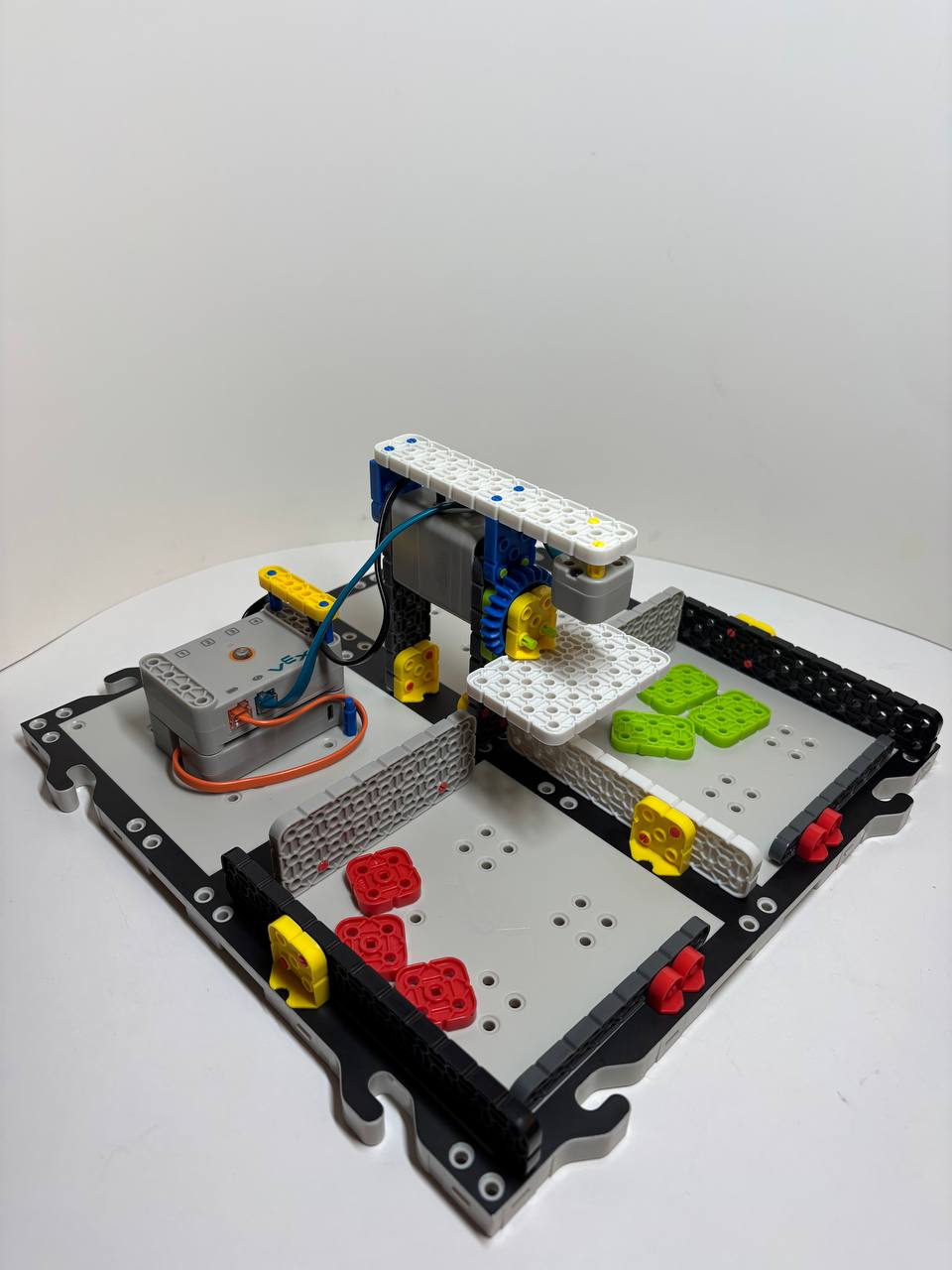
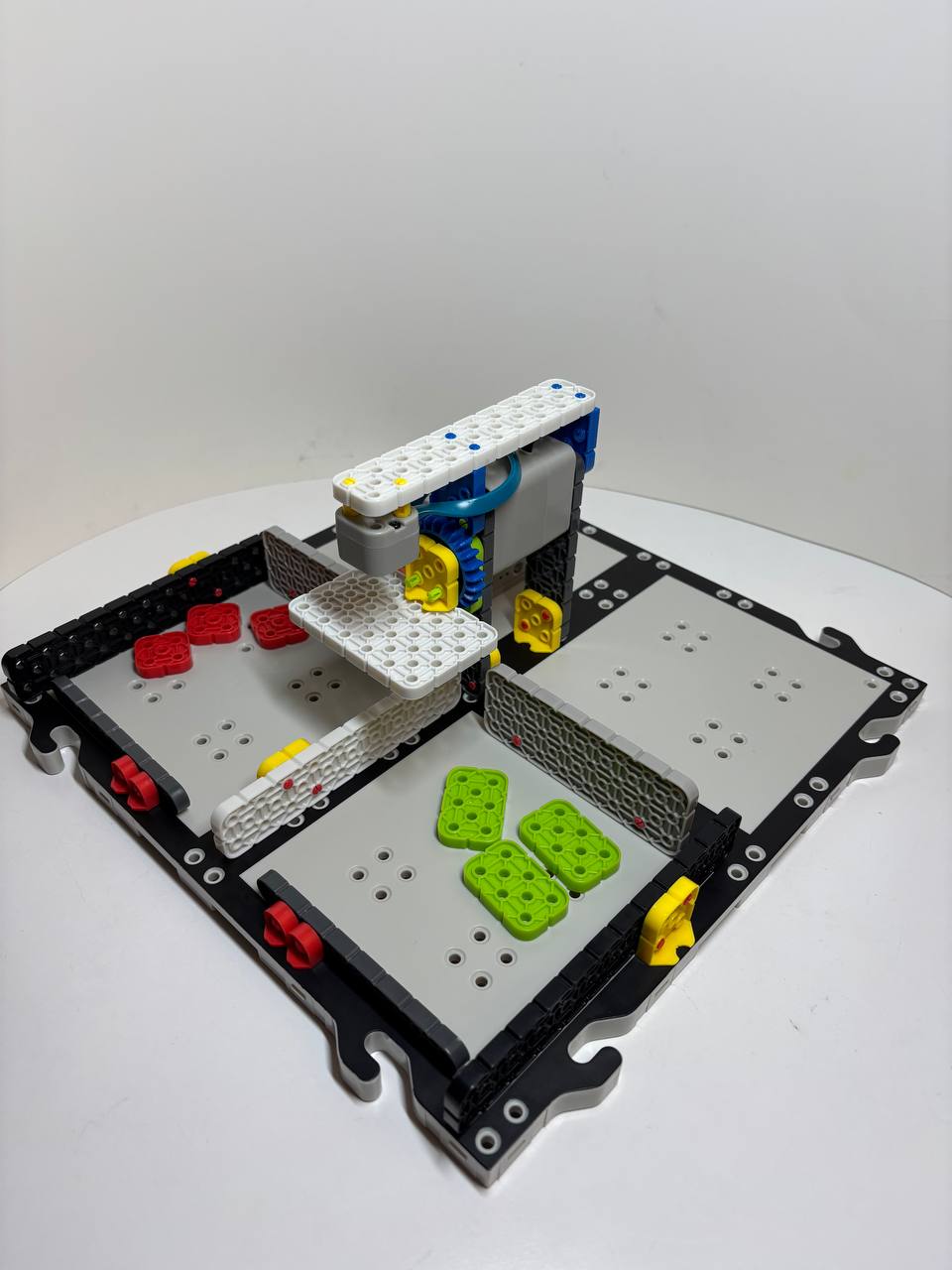
Let me introduce my new model based on VEX GO — a Color Sorter (for two colors). This model works very well when studying the color sensor (Eye Sensor), as well as when introducing conditional statements (if–else).
I am already working on an extended version that will be able to sort 4–5 colors using a moving mechanism.
What do you think about using this model in lessons?
A sample program is also included.
See photos and videos below.
Thank you.
1 Like
This looks like such a fun model! I remember trying to build and code an object sorter with @Aimee_DeFoe many years ago at a conference we attended together 
I could see this also being a good vehicle to help students understand how the sensor perceives color, and introducing hue value. For instance, what other shades of red or green will it sort correctly, besides just pieces in the kit? What about construction paper? Marker caps? You could talk with students about what is similar/different between the shade of red/green of the GO piece and the other objects they’re testing.
The Monitor in VEXcode GO could also be a great visual tool to use with this - to be able to see in real time if the Eye Sensor detects red/green, and also the hue value it’s reporting. Then you have a visual of the hue data to bring to students to get them thinking about hue value and the sensor. Here’s an article about using the Monitor in VEXcode GO, in case that is helpful.
1 Like
Thank you for the link. Yes, I am already familiar with this article.
Over many years, I have developed a solid methodology for working with light and color sensors from different manufacturers. So this is not an issue for me.
With my students, we analyze factors that can affect accurate color recognition, such as external lighting conditions, including natural sunlight and its impact on sensor performance. We also create reference tables before programming, where we define and test colors of different objects — not only kit elements but also additional materials like colored paper (as you mentioned, cards; we have used paper as well).
So overall, thank you, but this is part of my regular teaching practice.
Currently, I am working on developing a color sorter capable of handling 4–5 colors, with a rotating mechanism that can distribute objects into four different sections instead of two, as in the current version.